
 Schedule Your
 Make a payment to Horizon Eye Care
  OnlineStore
 Text for Appointment
  Chat with Us
  Call 704.365.0555
By: Zachary Rorabaugh | September 19, 2024 | Blog, Eye Exams, Zachary Rorabaugh
Artificial intelligence (AI) is transforming various industries, and healthcare is no exception. Among the medical specialties benefiting from AI, ophthalmology has emerged as a field where AI-driven innovations are showing remarkable promise. From improving diagnostic accuracy to enhancing treatment protocols, AI has the potential to revolutionize eye care and significantly impact patient outcomes.
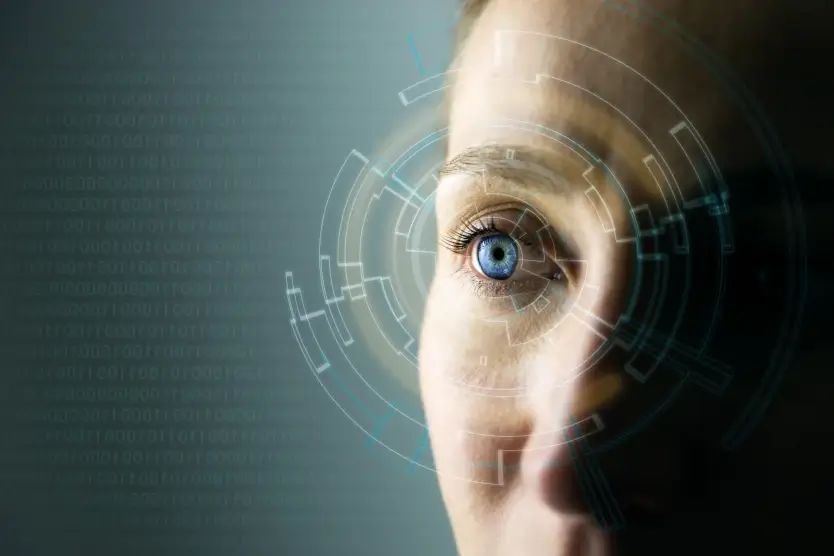
The Growing Need for AI in Ophthalmology
Ophthalmology is a highly specialized field, but with the growing global population, the demand for eye care services is rising. Age-related conditions like cataracts, glaucoma, and diabetic retinopathy are becoming more prevalent, placing additional pressure on healthcare systems. Compounding the challenge is the global shortage of ophthalmologists, particularly in low- and middle-income countries.
AI offers solutions to these challenges by improving both the efficiency and quality of eye care. By harnessing vast datasets, machine learning algorithms can quickly analyze complex visual data, assisting ophthalmologists in identifying conditions earlier and with greater precision.
AI in Ophthalmic Diagnostics
The primary application of AI in ophthalmology lies in diagnostics, particularly in detecting retinal diseases. For instance, deep learning algorithms can be trained to interpret retinal images, identifying patterns and signs of diseases like diabetic retinopathy, macular degeneration, and glaucoma. One of the most successful AI tools is Google's DeepMind, which developed an AI system capable of diagnosing over 50 different retinal conditions from optical coherence tomography (OCT) scans.
These AI tools excel at detecting subtle changes in retinal images that might be missed by the human eye, offering earlier detection and intervention. In some cases, these algorithms have demonstrated diagnostic accuracy on par with, or even exceeding, that of trained ophthalmologists. This not only improves outcomes but also makes screening more accessible, especially in underserved areas.
AI in Predicting Disease Progression
AI’s ability to analyze large datasets extends beyond diagnosis to the prediction of disease progression. For example, in glaucoma, which is characterized by damage to the optic nerve, early diagnosis and intervention are crucial. AI models trained on patient data can predict the likelihood of disease progression, helping doctors tailor treatment plans and monitor patients more effectively. Similarly, in diabetic retinopathy, AI tools can assess the severity of the condition and predict its progression, enabling proactive interventions.
Enhancing Surgical Precision
AI is also being integrated into ophthalmic surgery, enhancing precision and safety. In cataract surgery, for example, AI algorithms can assist surgeons by analyzing preoperative data, such as the shape and thickness of the cornea, to plan more precise incisions and lens placements. AI-enabled robots can perform parts of the surgery, reducing the risk of human error and improving outcomes.
Additionally, AI can simulate complex surgeries, allowing ophthalmologists to practice and refine their techniques in a virtual environment. This capability not only aids in training but also reduces complications in real-life surgeries, making procedures safer and more predictable.
AI for Teleophthalmology
Telemedicine has gained considerable traction in recent years, particularly during the COVID-19 pandemic, and ophthalmology is no exception. AI has enabled the development of teleophthalmology platforms, where patients can upload images of their eyes taken with smartphones or specialized devices. AI algorithms analyze these images for signs of eye diseases, providing preliminary diagnoses remotely. This is particularly beneficial in rural or underserved regions where access to ophthalmologists is limited.
By allowing remote screenings and early detection, teleophthalmology reduces the burden on in-person consultations and enables patients to seek timely treatment. This is particularly important for conditions like diabetic retinopathy, where early detection can prevent vision loss.
Challenges and Ethical Considerations
While AI holds great promise in ophthalmology, there are challenges that must be addressed. One of the main concerns is the interpretability of AI algorithms. Deep learning models often function as "black boxes," meaning that while they can make highly accurate predictions, it’s difficult to understand how they arrive at their conclusions. This lack of transparency can lead to hesitation among clinicians in fully trusting AI systems.
Additionally, issues surrounding data privacy and security are paramount. AI systems rely on large amounts of patient data to function effectively, raising concerns about the protection of sensitive information. Ensuring that AI tools adhere to stringent data protection regulations is essential to maintaining patient trust.
Another challenge is the risk of bias in AI algorithms. If the training data used to develop AI models is not diverse, the algorithms may be less effective at diagnosing or predicting diseases in certain populations, leading to health disparities. Therefore, it is crucial to develop and validate AI systems on diverse datasets to ensure equitable care for all patients.
The Future of AI in Ophthalmology
As AI continues to evolve, its integration into ophthalmology will only deepen. With advances in machine learning and computer vision, AI will play a critical role in enhancing personalized care, enabling earlier interventions, and making eye care more accessible worldwide. Ongoing research and collaboration between technologists, ophthalmologists, and regulatory bodies will be essential to ensure that AI is safe, ethical, and beneficial for all.
In the future, AI could help not only in diagnostics and surgery but also in drug development and personalized treatments. By analyzing genetic data alongside imaging and clinical data, AI could identify which patients are more likely to benefit from certain treatments, leading to more tailored therapies and better outcomes.
Conclusion
Artificial intelligence is ushering in a new era in ophthalmology, promising to improve diagnostic accuracy, enhance treatment protocols, and make eye care more accessible to underserved populations. As AI technologies continue to advance, they will play a vital role in meeting the growing demand for eye care services and addressing global challenges in vision health. However, to fully realize AI’s potential, careful attention must be paid to ethical considerations, data security, and ensuring that AI systems are developed and validated to serve all populations equitably. With the right approach, AI has the potential to revolutionize ophthalmology and ultimately prevent millions of cases of blindness worldwide.
For an appointment at Horizon Eye Care, schedule a consultation call 704-365-0555 Monday-Thursday, 8 a.m. to 5 p.m., or Friday, 8 a.m. to 3 p.m. The optical department closes on Fridays at 2:30 p.m.

Zachary Rorabaugh, COO
Zach has been Chief Operating Officer of Horizon Eye Care since 2018. As COO, he oversees all business operations for the organization while executing the strategic vision of the Board of Directors. Zach is responsible for the establishment and implementation of organizational culture for the practice as he empowers the leadership team to execute key strategic initiatives. His focus is leveraging the practice’s expertise, technology and regional footprint to provide the highest quality services and exceptional value to its patients.